
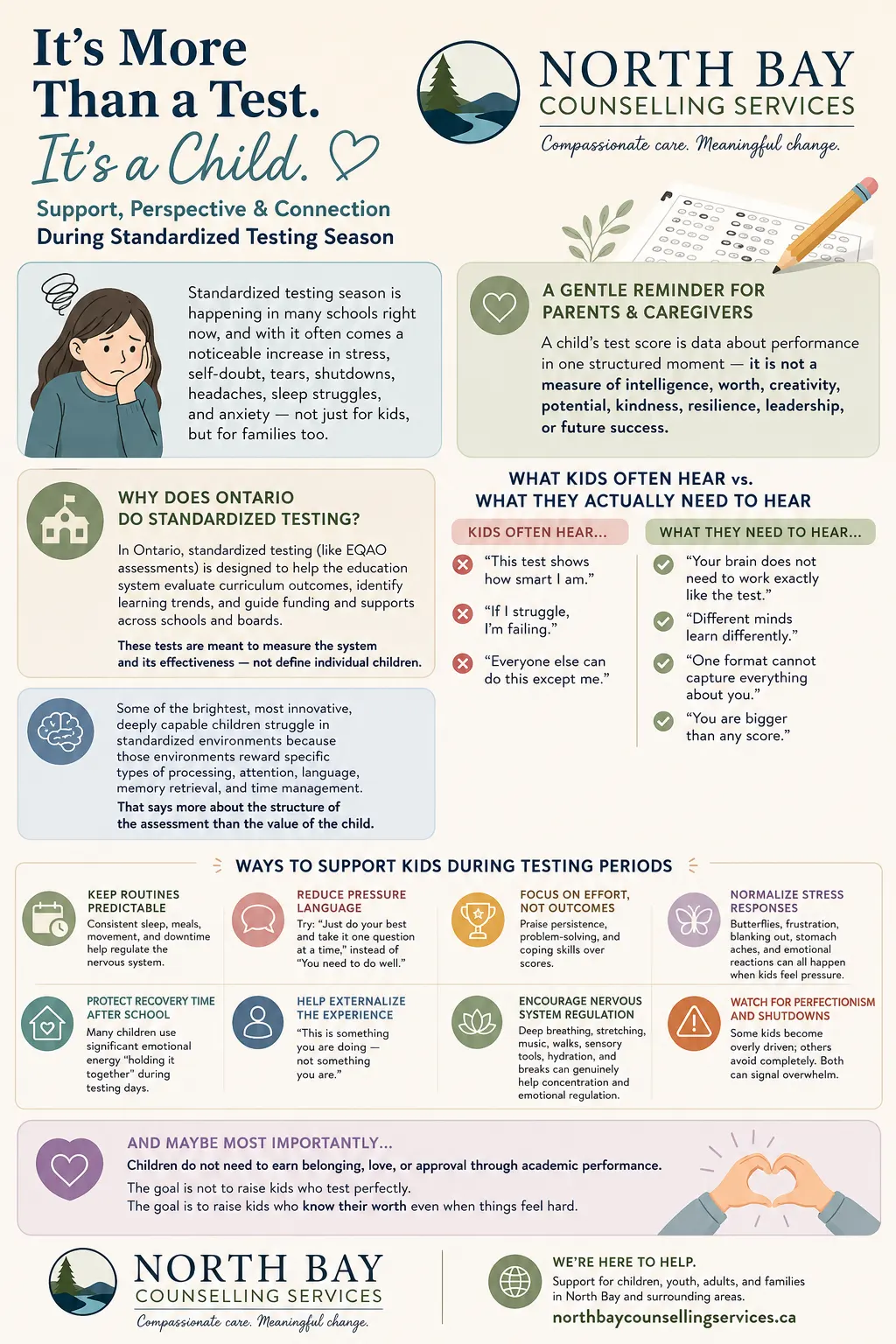
Standardized testing season is happening in many schools right now, and with it often comes a noticeable increase in stress, self-doubt, tears, shutdowns, headaches, sleep struggles, and anxiety — not just for kids, but for families too.
As a therapist, I want to gently remind parents and caregivers of something important:
A child’s test score is data about performance in one structured moment — it is not a measure of intelligence, worth, creativity, potential, kindness, resilience, leadership, or future success.
In Ontario, standardized testing (like EQAO assessments) is designed to help the education system evaluate curriculum outcomes, identify learning trends, and guide funding and supports across schools and boards. These tests are meant to measure the system and its effectiveness — not define individual children.
But many kids internalize these experiences differently.
 Children often hear: “This test shows how smart I am.” “If I struggle, I’m failing.” “Everyone else can do this except me.”
 What they actually need to hear is: “Your brain does not need to work exactly like the test.” “Different minds learn differently.” “One format cannot capture everything about you.” “You are bigger than any score.”